Guides · Nomads Community
Driving in Santa Teresa: Roads, Rivers, Dust and Staying Safe
What Santa Teresa’s roads are really like, from potholes and river crossings to navigation, speed bumps and driving without throwing dust on people.
- Category
- guide
- Reading time
- 6 min
- Written by
- Flo
- About
- Santa Teresa, Puntarenas, Costa Rica
- Tags
- transport, road-safety
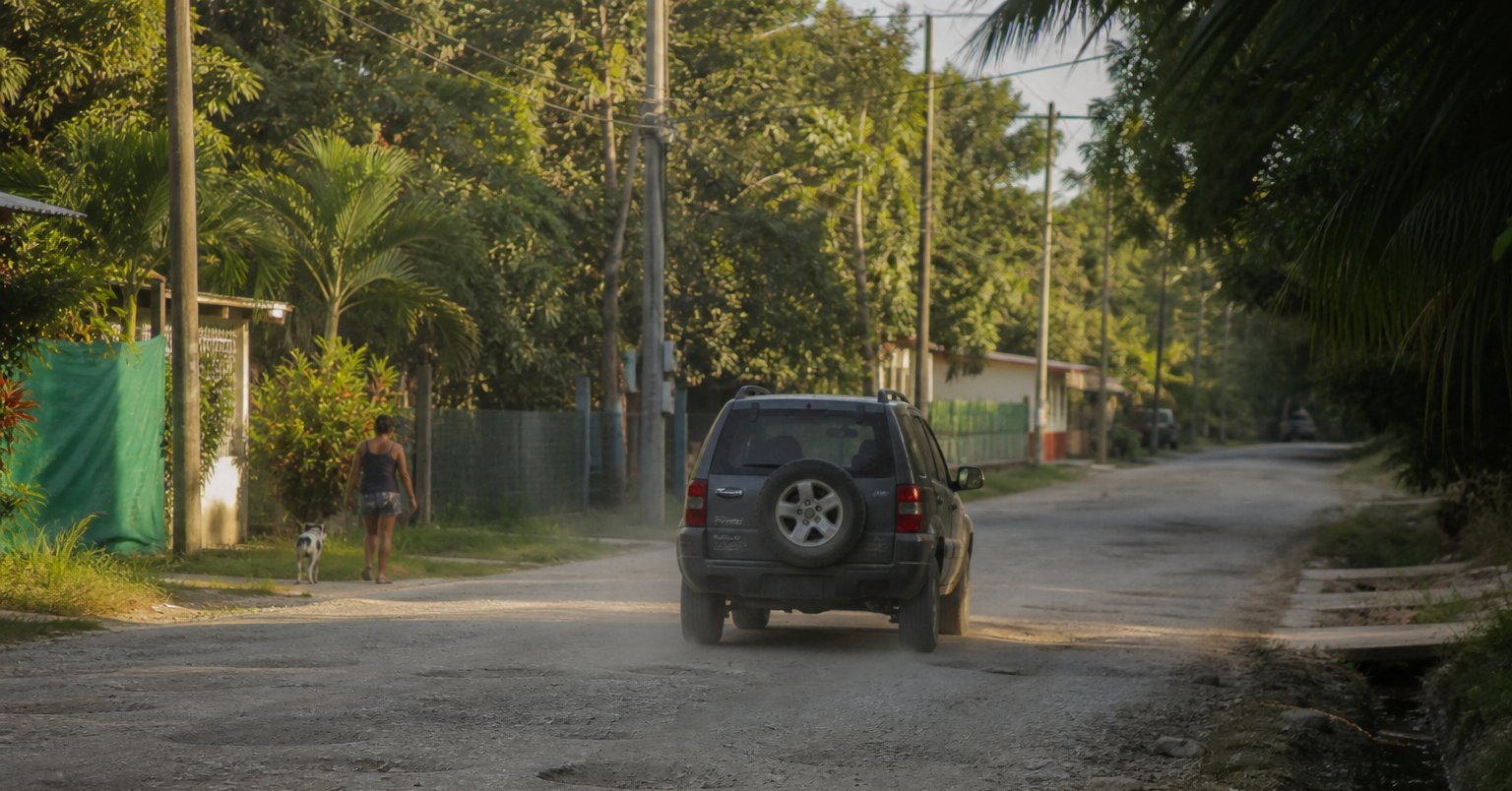
Driving around Santa Teresa gives you freedom, but the roads require more attention than many visitors expect. Pavement can disappear without warning, potholes change after heavy rain, speed bumps are not always clearly marked, and some routes include river crossings.
The most useful rule is simple: drive more slowly than you think you need to. It gives you time to see road damage, animals, pedestrians, motorbikes and unexpected changes ahead—and creates less dust for the people living beside the road.
Use Waze, but do not follow it blindly
For driving around Costa Rica, Waze is generally more reliable than Google Maps. Google Maps sometimes suggests shortcuts that are unsuitable for normal cars, especially on rural roads.
No navigation app fully understands current road conditions. A route shown as passable may include:
An unpaved or badly damaged road
A steep section requiring more clearance
Deep mud after rain
An unbridged river crossing
A road that has recently deteriorated
A shortcut better suited to an ATV or four-wheel-drive vehicle
Before taking an unfamiliar route, check it with your accommodation, destination, rental company or a local driver. This matters especially during the rainy season, when conditions can change within hours.
If Waze and a knowledgeable local give different advice, follow current local knowledge—not the app.
Check for river crossings before leaving
Some routes around the Nicoya Peninsula include rivers without bridges. A crossing that looks manageable in the dry season can become dangerous during or after heavy rain.
Before starting an unfamiliar journey:
Ask whether the route includes river crossings.
Check whether those crossings are currently open and usable.
Confirm whether the road suits your type of vehicle.
Ask if there is a longer route that avoids the river.
Recheck conditions during the rainy season, even if you have used the route before.
A four-wheel-drive vehicle improves traction, but it does not make deep or fast-moving water safe.
What to do when you reach a river
If you arrive at a river and do not know whether or how to cross, do not enter the water to experiment.
Stop somewhere safe and:
Wait to observe the water and other vehicles.
Ask a Tico or local driver who knows that crossing.
Confirm whether your specific vehicle can pass.
Ask where the safe line is—left, right, through the middle or at an angle.
Turn around or take another route if conditions are uncertain.
The best crossing line depends on the riverbed, current, depth and recent rain. It cannot be determined from the road or an app alone.
Local advice can provide useful current knowledge, but it is not a guarantee. Do not cross if the water is fast, rising, difficult to judge or beyond your vehicle’s capacity. Waiting or turning around is better than losing the vehicle—or putting passengers and rescuers at risk.
Expect potholes to appear suddenly
Potholes are common and can become deeper after heavy rain. Some fill with water, making their size difficult to judge.
To reduce the risk of damage:
Leave enough space behind the vehicle ahead.
Slow down when visibility is limited.
Avoid swerving suddenly into oncoming traffic.
Treat water-filled holes as deeper than they look.
Be particularly careful at night.
Check the rental agreement for tyre, wheel and undercarriage coverage.
Do not brake sharply only when you reach the pothole. A steady, moderate speed gives you more time to react and makes your movement more predictable to motorbikes behind you.
Watch for speed bumps in every town
Speed bumps—often called muertos locally—are common throughout Costa Rica. They may be painted, faded, poorly marked or difficult to see at night and in heavy rain.
Expect them:
When entering and leaving towns
Near schools
Around busy pedestrian areas
Close to shops, crossings and community facilities
Anywhere vehicles are expected to slow down
Some bumps are high enough to damage a low vehicle when crossed too quickly. Slow down when approaching populated areas, even if you do not see a warning sign.
Drive slowly through towns
Town roads are shared spaces. You may encounter:
Children near schools
Pedestrians walking without pavements
Cyclists and motorbikes
Dogs crossing or resting near the road
Horses, cattle or other domestic animals
Monkeys, coatis and other wildlife
Vehicles stopping without much warning
Driving slowly is not only about avoiding an accident. It also reduces noise, dust and stress for people and animals living beside the road.
Be especially careful at dawn, dusk and night, when visibility is lower and animals are more active.
Dust affects more than visibility
During the dry season, every passing vehicle lifts dust from unpaved roads. Fast driving sends more of it toward nearby homes, businesses, plants, pedestrians and animals.
For visitors, dust may be an inconvenience. For residents along the road, it can enter homes and businesses throughout the day.
You can reduce it by:
Slowing down before reaching homes and pedestrians
Accelerating gently
Leaving space between vehicles
Avoiding unnecessary trips
Sharing rides when practical
Walking short distances when the route is safe
Slowing only after you have passed someone is too late—the dust is already moving toward them.
Parking and roadside awareness
Roads are narrow, and poor parking can create dangerous bottlenecks.
Avoid parking:
In front of entrances or gates
On blind bends
Where pedestrians must step into traffic
In front of local businesses without permission
On soft ground where the vehicle may become stuck
Close to a riverbank or drainage channel during heavy rain
If there is no obvious parking area, ask before leaving the vehicle. A convenient space for you may be someone’s entrance, delivery area or access route.
Ways to support locally
Drive slowly near homes, schools, pedestrians and animals.
Reduce unnecessary journeys and share rides when possible.
Avoid treating unpaved roads as off-road recreation areas.
Pay promptly and fairly when using local drivers or transport services.
Report dangerous road conditions when a relevant local channel is available.
Find local transport services
Looking for a taxi, shuttle, vehicle rental, mechanic or roadside assistance?
Explore the Nomads Community services directory and use the Tico-owned tag to find Costa Rican-owned options.
Browse Tico-owned transport services
FAQ
Should I rent a car or an ATV?
It depends on your accommodation, routes, luggage and confidence. An ATV can handle some rough roads but offers less protection from rain, dust and collisions. Neither option makes unsafe roads or flooded rivers safe.
Do I need four-wheel drive?
Not for every journey, but it may be useful for steep, muddy or badly maintained routes. Ask your accommodation about the specific roads you will use before booking.
Is Google Maps reliable around Santa Teresa?
It can be useful for finding places, but it may suggest unsuitable shortcuts. Use Waze for driving and confirm unfamiliar rural routes with someone who knows current conditions.
Can I cross a river if another vehicle just crossed?
Not necessarily. The other vehicle may have different clearance, traction or local knowledge. Conditions can also change quickly.
What should I do if I am unsure about a river crossing?
Do not enter. Wait, turn around or ask a local driver familiar with that crossing. If the water is fast, rising or difficult to assess, take another route.
Related Nomads Community guides
Road conditions can change quickly, especially during the rainy season. For recent route reports and local experience → Join the Nomads Community.